More books Like Familia Romana, for other languages
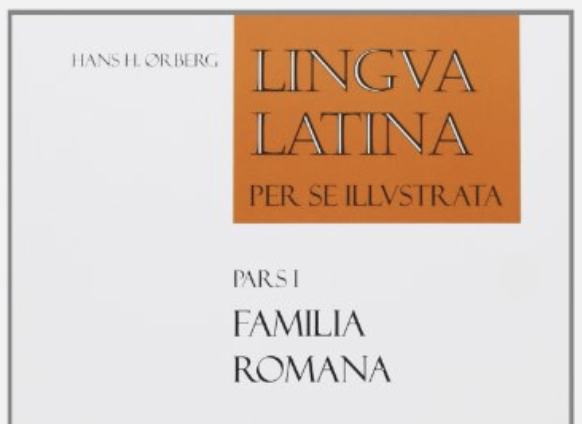
The cover of the textbook Familia Romana.
The Lingua Latina per se Illustrata books were, for me, quite crucial. I don’t think I would have learned Latin without them. The audiobook in particularly really helped me - I used to re-listen to chapters all day long, on the bus, at the grocery store, or wherever, just to get in some daily listening practice and revise whatever vocabulary and grammar I had recently covered working through the textbook. Even though my first Latin teachers used the ecclesiastical pronunciation, my months of listening to and imitating Hans Ørberg himself led me to use the classical pronunciation, always. For me, his amusingly grandfatherly voice was and is the voice of Latin.
Anyway, thanks to my success using Familia Romana to learn and, subsequently, to teach, I find I also prefer these methods for other languages as well. Personally, I have used L’Italiano secondo il methodo natura to study Italian and briefly tutored English using English by the nature method. I cannot vouch for the accuracy of all of these books. Indeed, some are potentially outdated in respect to spelling and vocabulary. Still, I believe they are a valuable resource when used with a teacher and for that reason I have decided to post links to all books of this kind that I am aware of.
To be clear, I do not believe that one can learn Latin, or any other language, solely by reading a textbook or even reading and listening. One needs to memorize vast amounts of vocabulary, at least ten or fifteen thousand words (this is about how much I needed to read the Harry Potter series in Italian, for example), and all of the grammar, but it is my view that words and grammar are best learned in context (ideally with the help of a teacher or, if necessary, a dictionary), then formally memorized only after they are fully understood. I am presently writing a blog post about how I use Anki and other techniques to memorize vocabulary, phrases, and grammar that I learned from context. Still, nature method textbooks can be a great way to learn in context and understand material which may then be memorized.
Ora Maritima.(another Latin book.)
Italian Athenaze. (NB: this is not quite a “nature method book,” but it is the closest thing I know of Ancient Greek that actually allows one to read the ancient authors; Logos, despite being a valiant effort, contains more errors and alone is not sufficient, I believe, if one wishes to progress to the classics.)
L’Italiano secondo il methodo natura.
Deutsch nach der Naturmethode.
Russian through reading. (NB: this is not a nature method book, but something like Athenaze.)
A course in Modern Icelandic. (NB: Like the above, this is closer to Athenaze.)
Osweald Bera. (NB: More of a graded reader than a textbook, this book cannot be used without a more traditional textbook or at least a teacher capable of explaining grammar. The lack of formal grammar instruction means that, to me at least, it falls short of being Familia Romana for Old English.)
Many books of this kind can also be downloaded from the Vivarium Novum’s Subsidia website. If you are interested in French, German, English, Spanish, or Esperanto, I suggest looking there for resources.
I will continue to add links as I find them. Feel free to send them to me through Instagram, email, or in the comments.
NB: I may earn a commission for books purchased through some of the links on my site, specifically, those leading to bookshop.org.